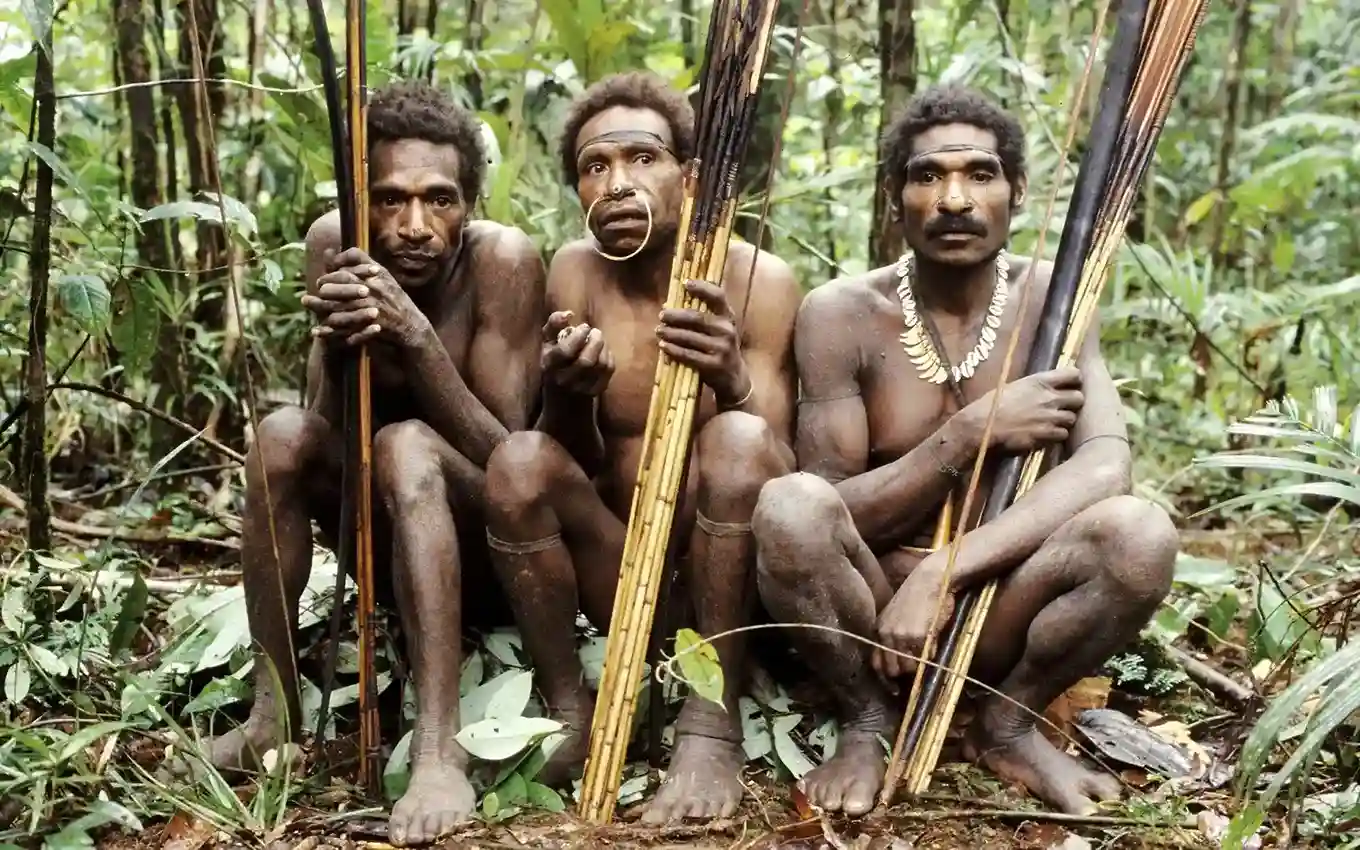
Discover the Fascinating Korowai Tribe, A Glimpse into Their Unique Culture &Tradition
The Korowai tribe is an indigenous group native to the remote forests of Papua, Indonesia, known for their extraordinary and isolated way of life.
Living in the dense rainforests, the Korowai have managed to maintain their traditional practices for centuries. They are among the world’s last uncontacted tribes, remaining largely untouched by modern civilization until relatively recent times.
The Korowai tribe is renowned for their unique treehouses, which they build high above the forest floor. These treehouses serve not only as a shelter but also as a reflection of the Korowai’s deep connection to the forest and their way of life.
The tribe is also known for its distinct customs, beliefs, and practices, all of which contribute to its identity as one of the most fascinating and secluded groups in the world.
Table of Contents
ToggleThe History and Origins of the Korowai Tribe
The origins of the Korowai tribe are shrouded in mystery, as the tribe remained isolated from the outside world for centuries.
Their deep connection to the Papua rainforest has played a vital role in shaping their culture, traditions, and survival methods.
They are part of the broader indigenous Papuan population, yet their unique way of life has set them apart from other tribes in the region.
Unlike many indigenous groups who have had more exposure to outside influences, the Korowai tribe’s existence remained largely unknown until the late 20th century, making them one of the last truly uncontacted tribes in the world.
The Korowai’s isolation allowed them to develop distinct customs, language, and a way of life closely tied to the natural world.
For centuries, they depended on the dense jungle for food, shelter, and materials for their everyday needs. The tribe’s architectural skill is most notably seen in the construction of their towering treehouses, built high above the forest floor as protection from predators, floods, and rival tribes.
Their isolation, however, also meant that their cultural practices were preserved largely through oral traditions, passed down from one generation to the next.
Stories, legends, and history are shared orally, forming an integral part of the Korowai tribe’s legacy, and ensuring that their identity remains intact despite the pressures of modernization.
Beliefs and Spiritual Practices of the Korowai Tribe
The spiritual beliefs of the Korowai tribe are deeply tied to their natural surroundings. The Korowai are animists, meaning they believe that spirits inhabit the forest, trees, rivers, and animals.
These spirits play a central role in the tribe’s rituals, as they believe that maintaining harmony with these spirits ensures their survival and prosperity.
The Role of Spirits in Korowai Beliefs
In Korowai culture, the belief in spirits is foundational to their understanding of the world around them.
Every element of nature holds a spiritual significance trees, animals, rivers, and even the wind are all thought to be inhabited by spirits.
These spirits are not seen as omnipotent beings but rather as integral parts of the environment, which must be respected and maintained in balance.
The Korowai believe that their well-being depends on their relationship with these spirits, as harmony with the natural world ensures prosperity, good health, and protection from harm.
During rituals and ceremonies, the Korowai often invoke these spirits, asking for blessings or guidance.
The spirits are believed to have the power to influence the tribe’s daily life, from the success of their hunting expeditions to the fertility of their crops.
These rituals are conducted to maintain peace and ensure that the spirits do not become angry or cause harm to the community.
In this way, the Korowai’s spiritual practices reflect their deep reverence for the forest and the interconnectedness of all life forms.
The Bik: Spiritual Leaders and Shamans
Shamanism is at the heart of the Korowai tribe’s spiritual practices.
The bik, or shamans, are highly respected individuals within the community, often chosen for their spiritual gifts and ability to communicate with the spirit world.
The bik are responsible for performing rituals that help maintain spiritual balance and for addressing any negative spiritual influences that may arise within the tribe.
They play a crucial role in ensuring the tribe’s prosperity and guiding them through challenging situations, such as illness or conflict.
The bik use various methods to interact with the spirit world, including chanting, drumming, and the use of sacred objects.
They often enter a trance-like state to commune with spirits, gaining insights into the future or identifying causes of misfortune.
The bik also serve as healers, using their knowledge of plants, herbs, and spiritual practices to cure physical and mental ailments.
As the guardians of Korowai spirituality, the bik hold a special place of power and influence within the community, their decisions shaping the spiritual and physical well-being of the tribe.
Witchcraft and Protection Against Evil Spirits
In Korowai belief, witchcraft is a feared and dangerous force. The tribe believes that individuals can be possessed by evil spirits, which may lead to sickness, misfortune, or even death.
When an individual experiences unexplained illness or hardship, it is often attributed to the influence of malevolent spirits or witches. The Korowai community takes great care in identifying and protecting themselves from these harmful forces.
Rituals to ward off evil spirits and witchcraft are common, and the bik plays a key role in these protective practices.
They perform ceremonies designed to expel harmful spirits or witchcraft and restore balance to the individual or the community.
These rituals may involve offerings, prayers, and the use of sacred objects to protect the tribe from misfortune. In a community as closely-knit as the Korowai, the belief in witchcraft serves as a powerful motivator for social cohesion and spiritual vigilance.
The Korowai Tribe’s Relationship with the Outside World
The Korowai tribe’s isolation from the outside world has been both a source of intrigue and mystery.
For centuries, the tribe remained largely untouched by modern civilization, living in the forests of Papua without significant contact with other groups.
However, in recent decades, the outside world has begun to encroach upon their territory.
- Early Encounters with the Outside World, The Korowai tribe remained isolated for centuries, with little to no interaction with the outside world. It wasn’t until the 1970s that Dutch missionaries and anthropologists made first contact with the tribe, documenting their unique way of life. At the time, the Korowai had no prior exposure to modern civilization, and they viewed outsiders with suspicion and curiosity. These early encounters were often met with hesitation, as the Korowai people were unsure of the intentions of these visitors.
- The Impact of Modernization on the Korowai Tribe, In recent decades, globalization has gradually reached the Korowai tribe, bringing both opportunities and challenges. Some members of the tribe have relocated to nearby villages, where they have been introduced to clothing, modern tools, and agriculture. In some cases, younger generations have chosen to adopt aspects of modern life, such as education and trade, while still holding onto their traditional customs. Tourism has also played a role in shaping the tribe’s interaction with the outside world. Adventurous travelers and documentary filmmakers have sought to experience and document the Korowai’s unique lifestyle, leading to increased visibility.
- Preserving Korowai Culture in a Changing World, As modernization continues to reach the Korowai tribe, the challenge of preserving their culture becomes more pressing. Deforestation, government interventions, and economic pressures threaten their traditional way of life. Some Korowai have moved to government established settlements, where they face difficulties adapting to a sedentary lifestyle. Others continue to resist external influences, retreating deeper into the forest to maintain their ancestral customs.
The Korowai people themselves play a crucial role in this process, as they navigate the delicate balance between maintaining their identity and adapting to the modern world.
Recent Posts

Christmas in Jakarta 2025: Your Ultimate Guide to Festive Celebrations

10 Best Malls in Jakarta for Shopping & Dining